
Nerve Damage Compensation Claims
While most surgical procedures are carried out to a high standard, avoidable errors can sometimes result in nerve damage. If you have experienced ongoing pain, weakness, or loss of function following surgery, you may have grounds to bring a claim. The information below outlines your options and how we can help.

Helping Clients Secure Fair Compensation for Nerve Damage Caused by Negligence
Nerve damage can be a serious and life-altering consequence of surgical error or substandard medical care. Where avoidable injury to a nerve occurs during a medical procedure, the effects can include chronic pain, weakness, sensory disturbance, or loss of function. If you have suffered nerve damage due to negligent treatment, you may be entitled to pursue a compensation claim.
At McCarthy + Co Solicitors LLP, our specialist medical negligence solicitors have extensive experience assisting individuals whose lives have been significantly affected by surgical errors. We provide clear, practical advice on whether the standard of care fell below what was reasonably expected and whether a claim may be available in your circumstances.
Bringing a nerve damage claim
Nerves are delicate structures and can be vulnerable during surgical procedures. Medical professionals are expected to assess anatomical risks carefully and to take appropriate precautions to minimise the likelihood of injury. Where those standards are not met, and avoidable nerve damage occurs, legal remedies may arise.
You may wish to seek advice if you have experienced any of the following after surgery:
- Muscle weakness – Debilitating or unexpected weakness following a procedure.
- Shooting pains – Persistent or severe pain in the affected area after surgery.
- Altered sensations – Changes in sensation such as numbness, tingling, altered vision, or changes in hearing.
- Hot and cold sweats – Ongoing symptoms affecting comfort, stability, or daily functioning.
- Paralysis and immobility – Loss of movement in a limb or complete paralysis following surgical intervention.
Not every surgical complication will amount to negligence. However, where proper precautions were not taken or recognised risks were not appropriately managed, a claim may be possible.
What the data shows
Nerve injury is a recognised complication of many operations and procedures. The most reliable figures come from clinical studies carried out internationally. A systematic review published in 2026 brought together reported injury rates across a range of common procedures.
| Procedure | Nerve affected (effect) | Reported injury rate |
|---|---|---|
| Thyroid surgery | Recurrent laryngeal nerve (voice) | Temporary 2–11%; permanent 0.6–1.6% |
| Parotid gland surgery | Facial nerve (facial movement) | Temporary weakness 14–65%; permanent 2–6% |
| Wisdom tooth removal | Inferior alveolar nerve (lip and chin) | Up to 8%; permanent under 1% |
| Wisdom tooth removal | Lingual nerve (tongue) | Temporary 0.6–2%; permanent rare |
Source: Mohamed et al., systematic review of iatrogenic nerve injury in head and neck surgery (Cureus, 2026), summarising international studies. These are clinical figures for procedures also performed in Ireland; study definitions of temporary and permanent injury vary.
How our solicitors can help
To pursue a nerve damage claim successfully, it is necessary to establish that:
- A healthcare provider owed you a duty of care.
- That duty was breached by failing to meet the required standard during diagnosis, treatment, or surgery.
- The breach caused the nerve damage and any resulting loss.
Our solicitors can:
- Obtain and review your full medical records.
- Instruct independent medical experts to assess whether the standard of care was appropriate.
- Advise on whether the nerve injury was avoidable.
- Assess the extent of your losses, including pain, ongoing treatment needs, and loss of earnings.
- Manage communication with insurers, hospitals, or relevant agencies on your behalf.
Medical negligence claims involving nerve damage often require detailed expert evidence and careful analysis of surgical technique and clinical decision-making. Our team will guide you through each stage of the process with clear advice and realistic expectations.
Arrange a time to discuss your case with one of our experienced solicitors by completing our quick and confidential online form.
Call us Freephone to Discuss Your Case:
1800 390 555
Request A Call Back
Get a call back from our legal team at a time that suits you.
“McCarthy + Co. are a professional, competent and client-friendly firm. I would like to thank John and Deirdre for returning my calls promptly and answering any questions I had. John McCarthy looked after my case. I found John was extremely efficient and friendly, providing a high-quality service. I would have no hesitation in recommending McCarthy + Co. Solicitors. I would like to thank John and all the staff for an excellent and friendly service.”
Highly rated on TrustPilot
Read the latest reviews written by our happy clients.
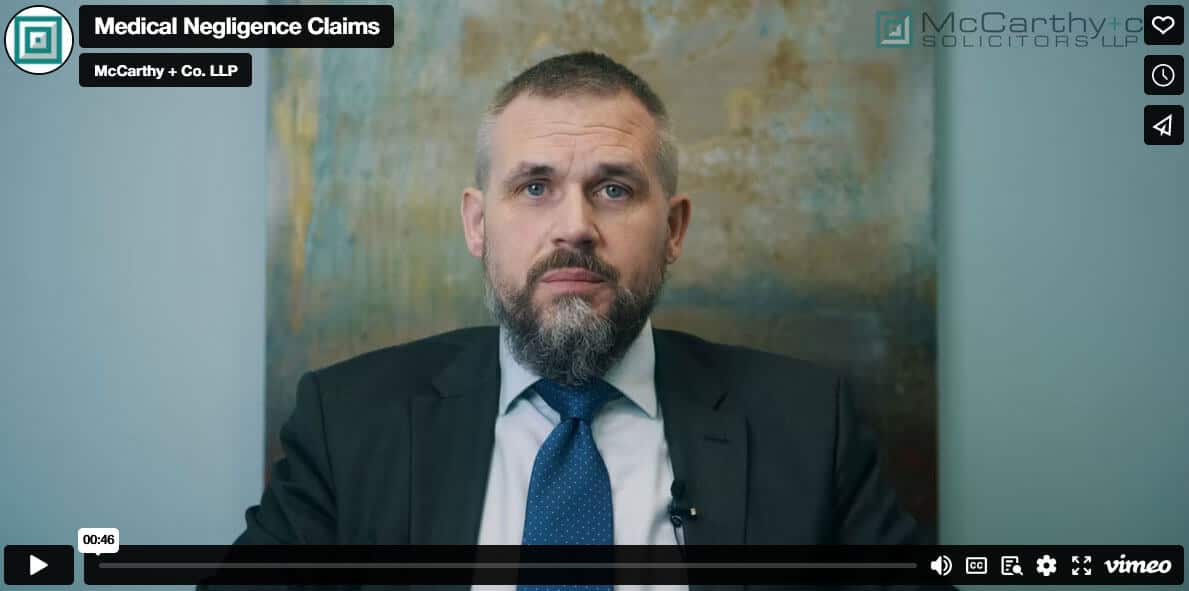
Meet John McCarthy
John McCarthy is a partner at McCarthy + Co Solicitors LLP, with more than 20 years of experience in medical negligence claims, including multiple actions on behalf of clients who have suffered nerve damage. He has represented clients in high-value cases at the High Court and Supreme Court level, with a commitment to securing the compensation his clients need to live with the chronic pain, weakness, and loss of function that can follow a serious injury.
John holds a diploma in civil litigation from the Law Society of Ireland and is a member of Action Against Medical Accidents (AvMA), the leading patient safety charity. He is also the author of A Patient’s Guide to Bringing a Claim for Medical Negligence. If you have suffered nerve damage as a result of negligent treatment, you can contact John directly at john@mccarthy.ie.
Frequently Asked Questions
Some of the questions our team are often asked.
What is nerve damage in a medical negligence context?
Nerve damage is an injury to a nerve that can affect sensation, movement, or pain signals. In a clinical setting, it can happen during surgery, injections, positioning, anaesthesia, or delayed diagnosis and treatment.
What symptoms might suggest nerve damage after hospital treatment?
Common symptoms include persistent numbness, tingling, burning or shooting pain, weakness, altered sensation, or reduced movement in a limb. Some people also experience ongoing sensitivity to touch, temperature changes, or reduced fine motor control.
Does nerve damage automatically mean the hospital was negligent?
No. Some nerve injuries are recognised complications even where the clinical team acted appropriately. A claim usually depends on whether the care fell below an acceptable standard, and whether that failing caused the injury, or made it worse.
What are common examples of hospital errors that can lead to nerve damage?
Examples can include:
- Avoidable injury during surgery due to technique, poor planning, or failure to protect vulnerable structures.
- Poor patient positioning, prolonged pressure, or inadequate padding during an operation.
- Injection or cannulation errors that injure a nerve.
- Delayed diagnosis or delayed treatment, where earlier action could have prevented worsening damage.
- Inadequate monitoring, follow-up, or response to postoperative warning signs.
Will my case go to court?
Not always. Many claims settle once the medical evidence is clear and liability, or causation, is better understood. Where a case does proceed in the High Court, clinical negligence claims are subject to structured case management, including the Clinical Negligence List, and the related practice directions introduced in 2025.
What should I do now if I think my nerve damage was avoidable?
Practical first steps often include:
- Seek medical review and follow-up for your symptoms.
- Write down a clear timeline of treatment dates, symptoms, and conversations you remember.
- Request copies of relevant medical records.
- Keep receipts and notes of expenses, time off work, and care needs.

Law Firm of the Year
Useful resources
Some links relating to nerve damage that you may find useful:
- WebMD – Nerve Pain and Nerve Damage
- Mayo Clinic – Peripheral nerve injuries
- Chronic Pain Ireland – Charity that supports people wih chronic pain
Our Awards & Accreditations
We are a multi-award winning firm, accredited by the Law Society of Ireland.


