
Defective Defibrillator and Pacemaker Claims
Pacemakers and defibrillators are life-sustaining devices, so a defect in one can have very serious, even fatal, consequences, from dizziness and fainting to cardiac arrest. Where you, or a family member, suffered because one of these devices was defective, you may be entitled to compensation, and a claim of this kind is usually made against the manufacturer of the device rather than the doctor who fitted it.
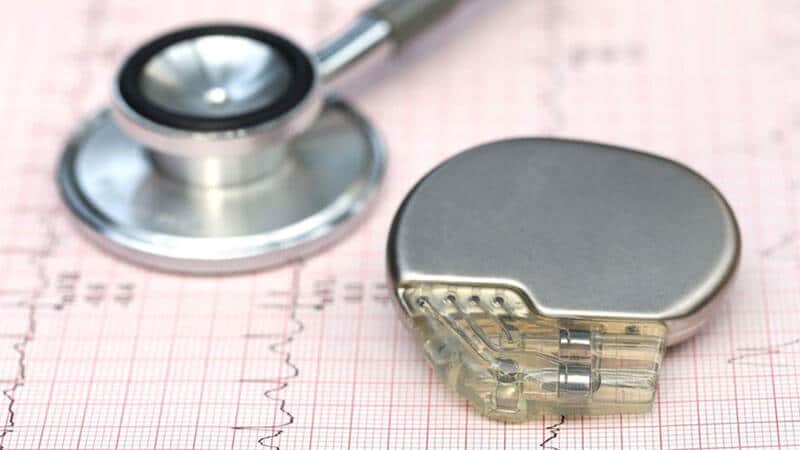
Bringing a Pacemaker or Defibrillator Compensation Claim
Here at McCarthy + Co Solicitors LLP, our team acts for clients harmed by defective implanted devices, and this work is led by our head litigation lawyer, John McCarthy. John has assisted many litigants in bringing successful claims against medical device manufacturers, including cases involving pacemakers. To arrange a time to speak with John, complete our quick and confidential online form.
What can go wrong with these devices?
A pacemaker regulates a slow or irregular heartbeat, while an implantable defibrillator, or ICD, monitors for dangerous rhythms and delivers a shock to restore a normal one. Both are highly reliable, but when a device is defective, the results can be severe. Recognised problems include:
- premature battery depletion, so that the device stops working sooner than expected, sometimes with little warning;
- fracture or displacement of the leads that connect the device to the heart;
- software or programming errors, causing incorrect pacing or monitoring;
- a failure to deliver a needed shock, or the delivery of unnecessary shocks;
- moisture entering the device and causing it to malfunction; and
- infection, or complications from the further surgery needed to replace a faulty device.
Depending on the fault, the consequences can range from fatigue and fainting to cardiac arrest and sudden death, which is why any suspected problem with these devices is taken so seriously.
A history of large scale recalls
Pacemakers and defibrillators have a long history of large-scale safety recalls, several affecting hundreds of thousands of devices. The most serious are classed by the United States regulator as Class I recalls, meaning the fault could cause serious injury or death. Some notable examples are set out below.
| Device / manufacturer | Year | Problem | Devices affected |
|---|---|---|---|
| Guidant (Boston Scientific) pacemakers | 2005 | Loss of the battery’s hermetic seal | About 54,700 |
| Medtronic Sprint Fidelis defibrillator leads | 2007 | Fracture-prone leads, linked to deaths | About 268,000 |
| St Jude Medical (Abbott) ICDs and CRT-Ds | 2016 | Premature battery depletion | About 350,000 |
| Medtronic pacemakers (Adapta, Relia, and others) | 2019 | Software error | About 173,000 |
| St Jude / Abbott pacemakers (Assurity, Endurity) | 2021 | Moisture entering the device | About 97,400 |
Sources: a peer-reviewed review of cardiac device recalls (HeartRhythm Case Reports, 2021) and United States FDA recall records. Figures are worldwide or US totals and are rounded.
These are United States figures, but the same devices, made by the same manufacturers, are implanted in patients in Ireland, where they are monitored by the Health Products Regulatory Authority (HPRA). Under European Union rules, a manufacturer that identifies a safety problem must issue a field safety notice to the HPRA, and pacemakers and defibrillators from these manufacturers appear regularly among the notices it publishes. A recall or safety notice is therefore not a distant, foreign concern: it can directly affect Irish patients.
A recall does not mean that every device failed, or that every patient was harmed. It signals a fault serious enough to warrant action. Whether an individual patient has a claim depends on whether a defect actually caused them injury, which is a fact-specific question we can help you answer. A recall or safety notice affecting your device can, however, be valuable evidence.
Call us Freephone to Discuss Your Case:
1800 390 555
Request A Call Back
Get a call back from our legal team at a time that suits you.
Highly rated on TrustPilot
Read the latest reviews written by our happy clients.
Meet John McCarthy
John McCarthy is a partner at McCarthy + Co Solicitors LLP, with more than 20 years of experience in medical negligence and product liability claims, including claims on behalf of patients harmed by implanted medical devices. He has represented clients in high-value cases at the High Court and Supreme Court level, with a commitment to securing the fair compensation his clients need to manage the impact on their health.
John holds a diploma in civil litigation from the Law Society of Ireland and is a member of Action Against Medical Accidents (AvMA), the leading patient safety charity. He is also the author of A Patient’s Guide to Bringing a Claim for Medical Negligence. If you have suffered as a result of a defective pacemaker or defibrillator, you can contact John directly at john@mccarthy.ie.

Frequently Asked Questions
Some of the questions often posed to our medical negligence team.
Which pacemakers and defibrillators have been recalled?
Devices from all the major manufacturers, including Medtronic, Boston Scientific, and Abbott (formerly St Jude Medical), have been the subject of significant recalls, for problems such as premature battery depletion, fractured leads, software errors, and moisture entering the device. If you are unsure whether your device was affected, your hospital records and device card will identify the make and model, and we can help you obtain them.
Is the claim brought against the manufacturer or the hospital?
It depends on where the fault lies. If the device itself was defective in its design, manufacture, or safety information, the claim is generally against the manufacturer, under product liability law. If the harm was caused by how the device was selected, implanted, or monitored, that is a medical negligence claim against the clinician or hospital. In some cases both may be liable, and we will advise on the right approach.
What harm can support a claim?
A range, including injury from a device that stopped working, an unnecessary or absent shock, repeated corrective surgery, infection, and the physical and psychological effects of these. Where serious harm resulted from a defect, a claim can cover general damages for the injury and special damages for financial losses such as medical costs and lost earnings.
How do I prove a defective device claim?
You need to show that the device was defective and that the defect caused your injury. Under the product liability regime, this is a strict liability test, so you do not have to prove negligence, but you do need evidence, typically your medical records, the device details, any manufacturer safety notice or recall, and, where the device has been removed, the device itself, together with an independent expert opinion.
How long do I have to make a claim?
For a defective product claim, generally three years from the date you became aware of the injury, the defect, and the producer, with a ten-year long-stop from when the device was put into circulation. This differs from the two-year limit for a medical negligence claim against a clinician or hospital. The long-stop rules can be complex, so take advice rather than assume you are out of time.
How can a solicitor help me bring a claim?
A defective device claim can be technical, so a solicitor takes that work on for you: tracing the correct manufacturer or importer, gathering the medical records and expert evidence needed to show the device was defective and caused your injury, checking the time limits, and dealing with the manufacturer and its insurers to secure the compensation you are owed.

Law Firm of the Year
Useful resources
Some links that you may find useful:
- HPRA – Implantable medical devices
- Irish Statute Book – Liability for Defective Products Act 1991
- Irish Heart Foundation – Information and support on heart conditions
Our Awards & Accreditations
We are a multi-award winning firm, accredited by the Law Society of Ireland.


